


“Woman in Chair was my first thesis portfolio in the course of receiving my BFA in Art at UNC Charlotte. Until this point in my education, I had a great deal of direction and structure provided for me when making art. I approached projects by looking at the box I was given, and attempting to see how far I could stretch out of it. For this series, there was no box at all, and I was able to dream up anything I might want to make and write a proposal for it. I went into the class expecting to work on a short 3D animated film I had been developing for months beforehand, but while sitting in the studio on the first day, I was struck so heavily by the idea for Woman in Chair that I changed direction completely.
I had been feeling self conscious about how I was sitting in my chair all day, and as a person who enjoys “playing dress up” in their everyday life, had felt even more self aware that my appearance was so overdressed from everyone else. I’ve been in many situations growing up (and had many conversations with others who felt similarly) impacted by the expectations of how feminine people should behave in public, especially when you wear clothes that break the norm. You shouldn’t wear a dress, for example, unless you plan to keep your feet on the floor and don’t risk flashing someone. Don’t lean too far forward in case you show your bra or too much cleavage; don’t slouch or they’ll see the rolls of your belly through the fabric! And these are opinions expressed primarily by other women, not a conversation directed by the male gaze (not everything is to do with men!). This fosters a feeling that you have a spotlight on you, like everyone’s eyes are on your every move and breath, even when we recognize that the reality is more likely that nobody notices or cares what I do. And if they did notice, they’ll forget it minutes later. The insignificance of my appearance to others doesn’t feel as real as the hyperbolized importance of it in my mind, resulting from a lifetime of little comments and prejudices and sometimes even unintentional insults. I decided to create a figural series with my own hyperfeminine outfits, but this time with myself intentionally displayed in a true spotlight, fully aware that I’m being watched but not caring. And in some cases, even poking a little fun at it.
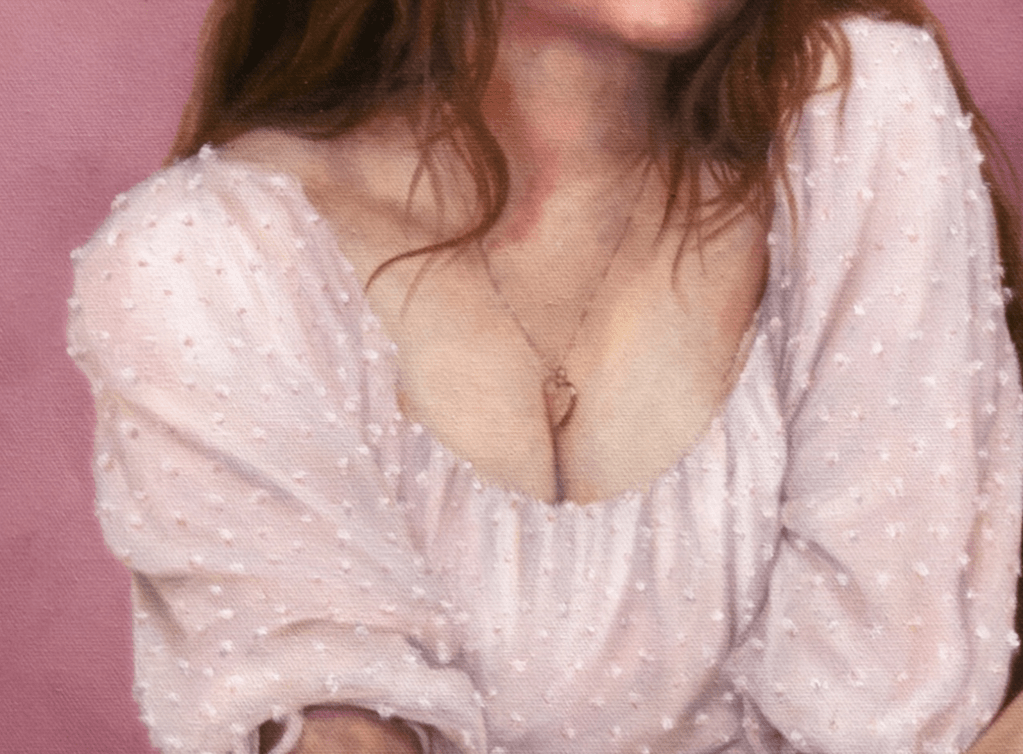
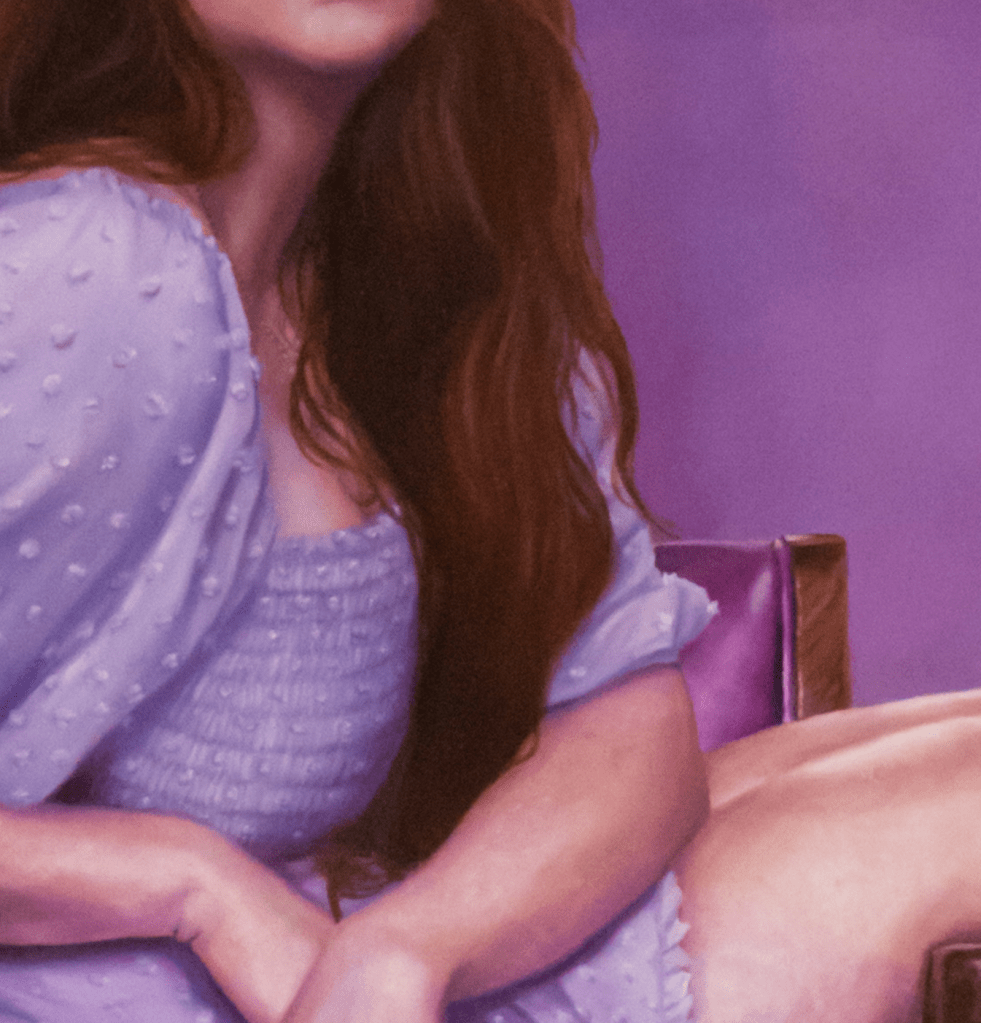
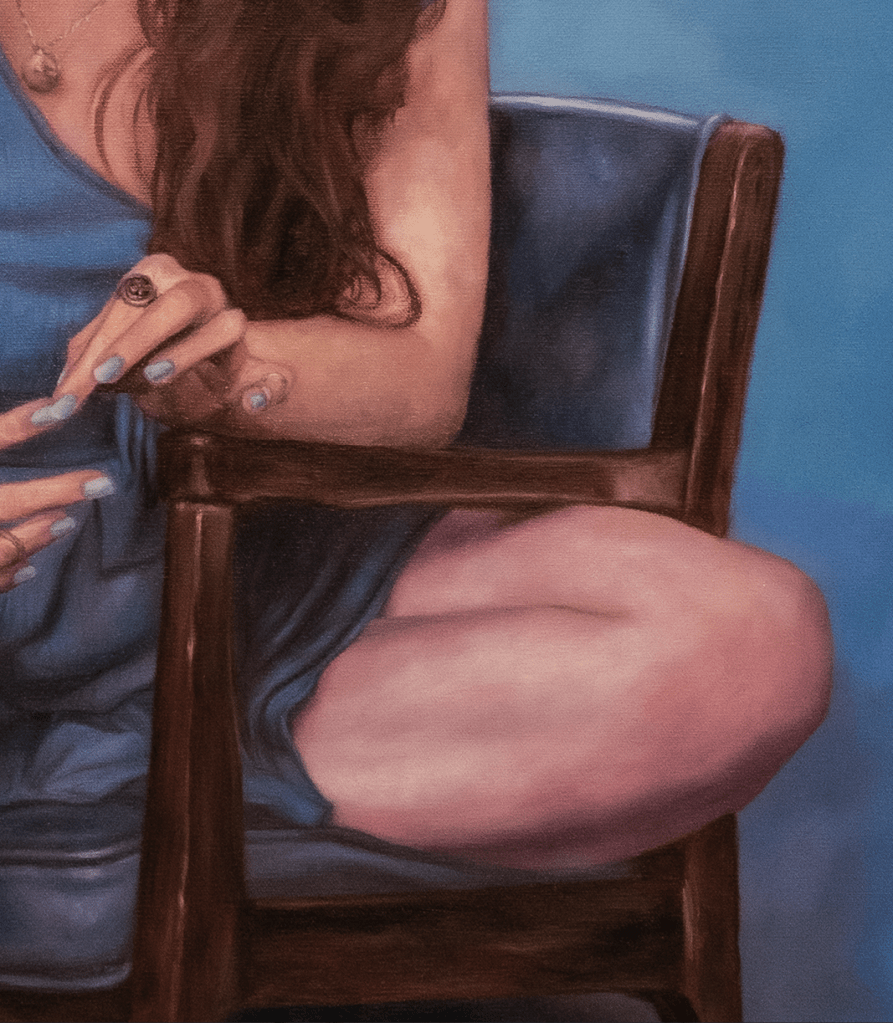
Woman in Violet has the most covered skin, my attention focused on the viewer, the underside of my skirt turned away. Woman in Blue feels more subtly relaxed, distracted, and unconscious of being viewed. A natural state. Leaning forward without anxiety of a neckline sliding down, legs spread in a way that’s more masculine, despite the feminine attire. And finally, Woman in Pink is such a personal favorite of mine. I was actually told by an older, more modest friend of mine that I should take it down from my website because it looks so unprofessional and drags down the rest of my work, which is confirmation enough for me that I’ve succeeded in my quest for scandal! You don’t see anything explicit in this pose, but posed it definitely is! I am aware that I’m being beheld, and past caring. I’ve leaned into the role of a haughty, maybe even bratty stereotype. I almost even look bored. Cleavage pushed together and only my own skin of my leg between the viewer and my underwear since my skirt has ridden up so much. And of course, choosing pink for the accent color was anything but accidental, and neither was naming the series so flatly and impersonally as I did. Letting the static nature of labelling myself “woman” just sit there and not pushing the title to be anything more or less than what it is… I’m satisfied with what I’ve made.”
“Here’s a bit of side story for other analytical art geeks, if you find it interesting: the layout of traditional portrait framing (almost like a photo studio) in my Woman in Chair series was a strategic choice to give myself the enough room to focus on developing my own oil painting technique. Mastering the medium is a lifelong and impossible feat, but it’s something which I found so important to focus on in my undergraduate education, where I had many more resources to help me grow. I had studied the year before with a method of rendering skin as demonstrated by Aleah Chapin, which incorporated a number of alternating layers of semi-transparent paint and tinted oiling-out. This style of rendering clicked really well with me, as it reminded me of using blending modes in layers of digital media projects. I found some success with it, but felt myself pushing up against a wall I couldn’t break through with my skill level. It was like I couldn’t figure out what was holding me back and what discovery I really needed to make in order to keep improving. I was learning and growing so well in every media but painting, which is the one I wanted most to thrive in. We had a studio visit with Chapin at the end of that semester and in getting to ask her questions about her techniques more specifically, I felt like I got more of a hold on how I could combine her methods with my own. I still felt like my work wasn’t standing up to what I knew I was capable of and yet, I couldn’t put my finger on why. I would try and try and get nowhere closer than where I started, so the struggle only compounded over time. I fell into a dizzying art block and didn’t finish a single painting for about a year, focusing on my digital media degree instead. I was so worried when I started my thesis that I was going to make the worst paintings of my life when it truly mattered! And oil painting being my professed “one true love,” I was more worried about letting myself down than the professors who believed in me or even maintaining my GPA to stay in the honors program.
I was lucky enough to attend a demo of another greatly admired hero, Lee Price, at UNCC back in 2018 and reached out to her to see if she might be an advisor for the series. I was ecstatic when she said yes. Her strategy of applying paint in a single layer, calculating the exact right color for each area in one go, was so drastically different from how I worked in layers that I figured I could only learn something new if I tried it. Not just tried it but did everything I could to wrap my mind around it and make it work for me. Nothing was more humbling than attempting Lee Price’s method of painting and realizing that my sense of color (which I was proud of at the time) was so misguided that I ended up laughing at myself. It was likely a result of that year of frustration ending in relief and disbelief that after all that worry, I just happen to have a breakthrough at the perfect time. Spoiler alert: it turns out I just needed to pay more attention to my color matching, stop overexaggerating contrast, and start paying attention to the subtle variations in color family and color intensity that are so much more powerful in rendering lifelike results. Learning to distinguish these subtle differences immediately and drastically improved my work quality. It took me probably 6 hours to paint that first foot (a foot that I celebrated endlessly for being the greatest achievement of my career) and I thought I’d never finish these paintings in time, but I got the hang of it and moved faster and faster. Woman in Violet was all Lee Price’s method, Woman in Blue additionally incorporated some of Aleah Chapin’s methods, and Woman in Pink, the fastest and most technically proficient of the three, was a combination of Price, Chapin, and my own preferred painting methods. That last painting felt like an epiphanized sweet spot for how I would paint going forward. It’s kept changing, of course, and it always will, but now I know if I go into a deep dark art block again I just have to let the whirlwind of idealistic debris in my brain take over and find a way to solve the puzzle, because there is an answer to find and when it finally clicks, it feels AMAZING.”

My palette at the beginning of the three paintings… 
This was the first section I painted on the first painting. I was so thrilled to see the new techniques I was trying were actually working for me! 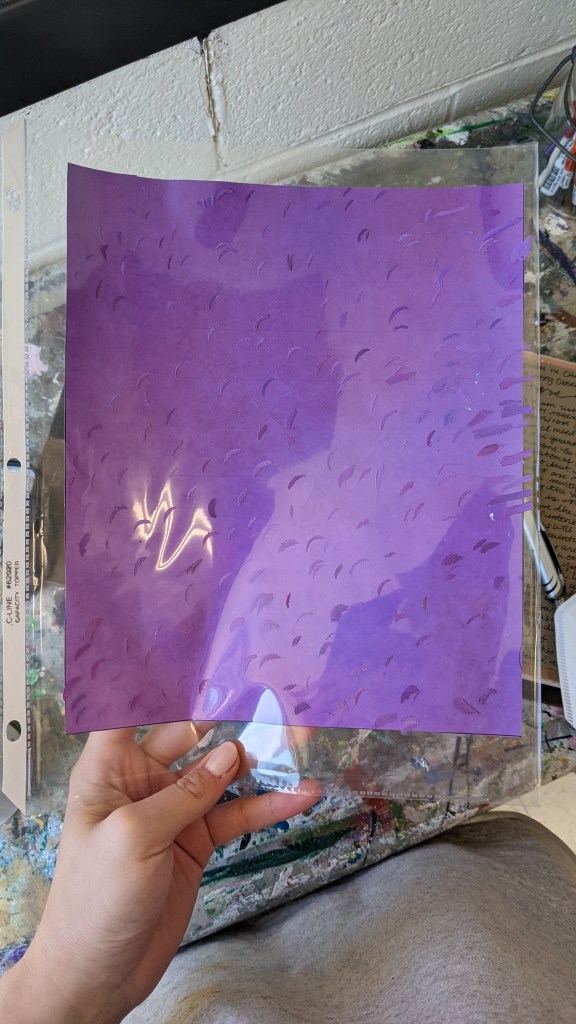
An example of my repeated attempts to refine my color mixing skills by training my eye against the reference image… Much harder than you’d think! 
First painting was getting close to finished here! I had been putting off doing the dress as long as possible because it was so daunting, but it didn’t end up being as bad as those straight lines of the chair, haha. 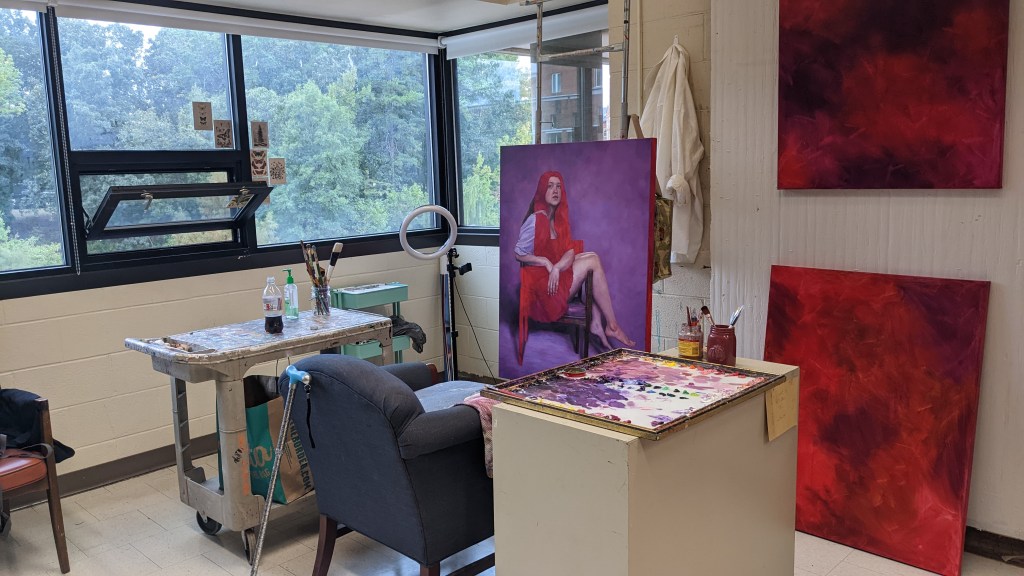
The violet painting in my first studio space at UNCC, before I moved to a different area at the end of the semester. Notice the palette getting progressively messier… 
Moving onto Woman in Blue, here’s my more successful attempts at matching color and training my eye to catch the subtle changes in color and how to adjust them! 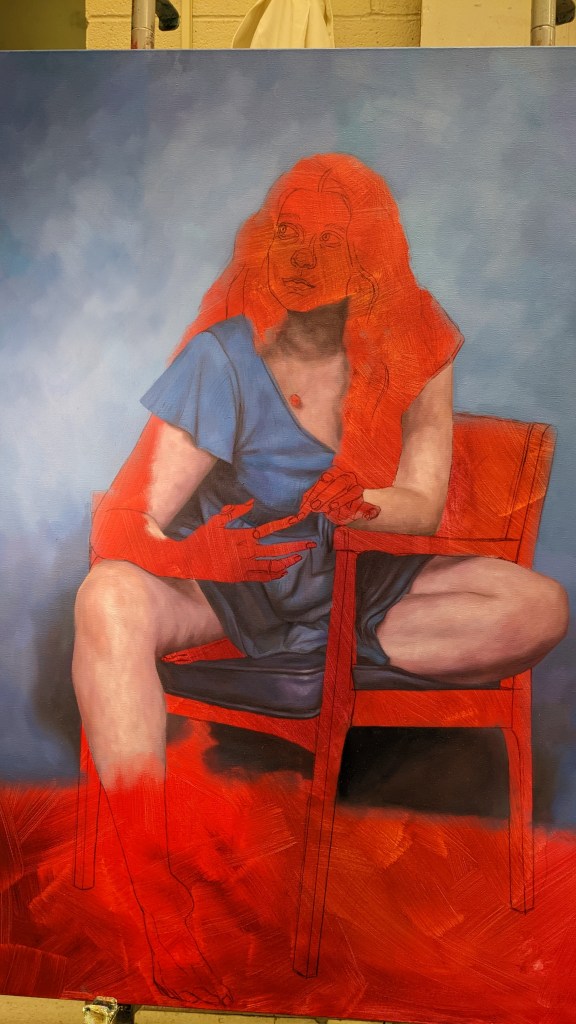
This time I started in on the dress immediately, thinking the material would be easier to render than the other one, but no, this dress was a nightmare to render! I finally got the hang of it by this point and was soooo ready to move onto the face. 
A shot of the chaos in my second studio space at UNCC in the midst of a long painting session. The palette is so full! 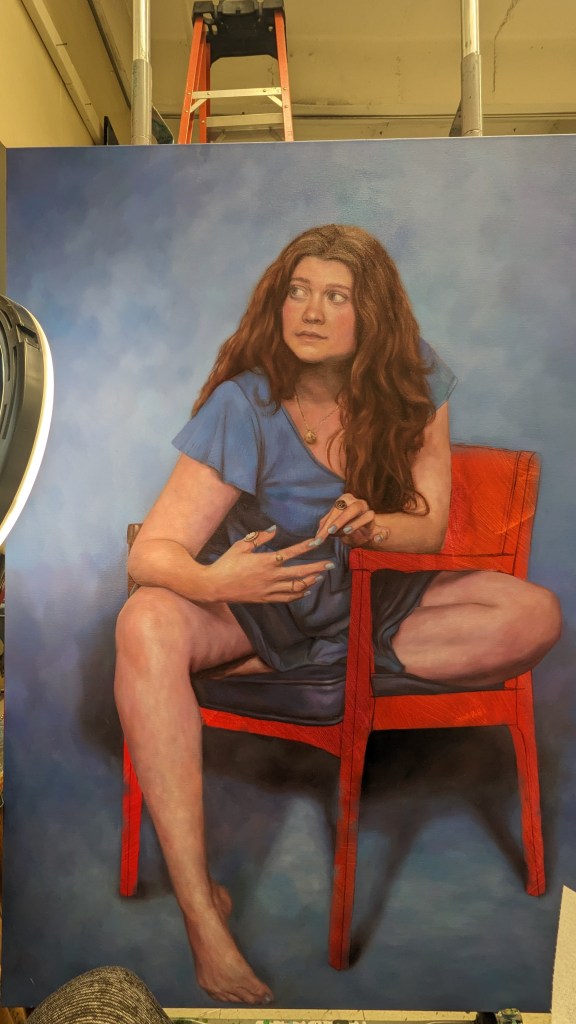
Here I was almost done with my first layer on Woman in Blue, and dreading that wretched chair… I’m mostly joking. I resent painting slanted/sloped lines on furniture, but the cushions were really fun to bring to life. 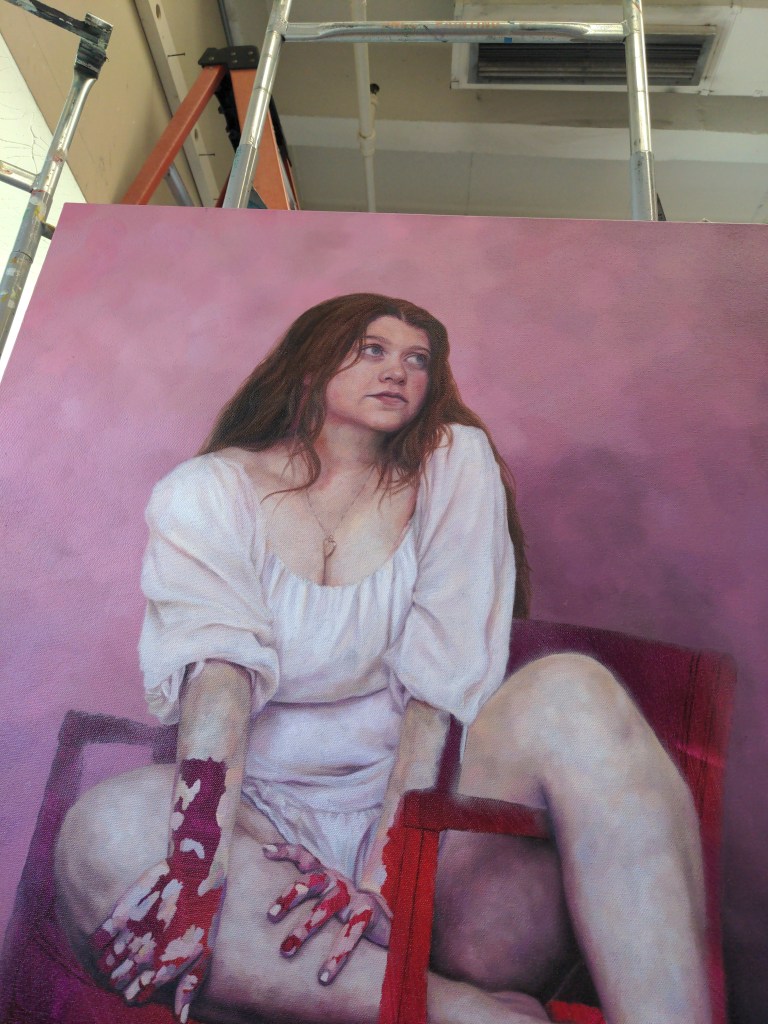
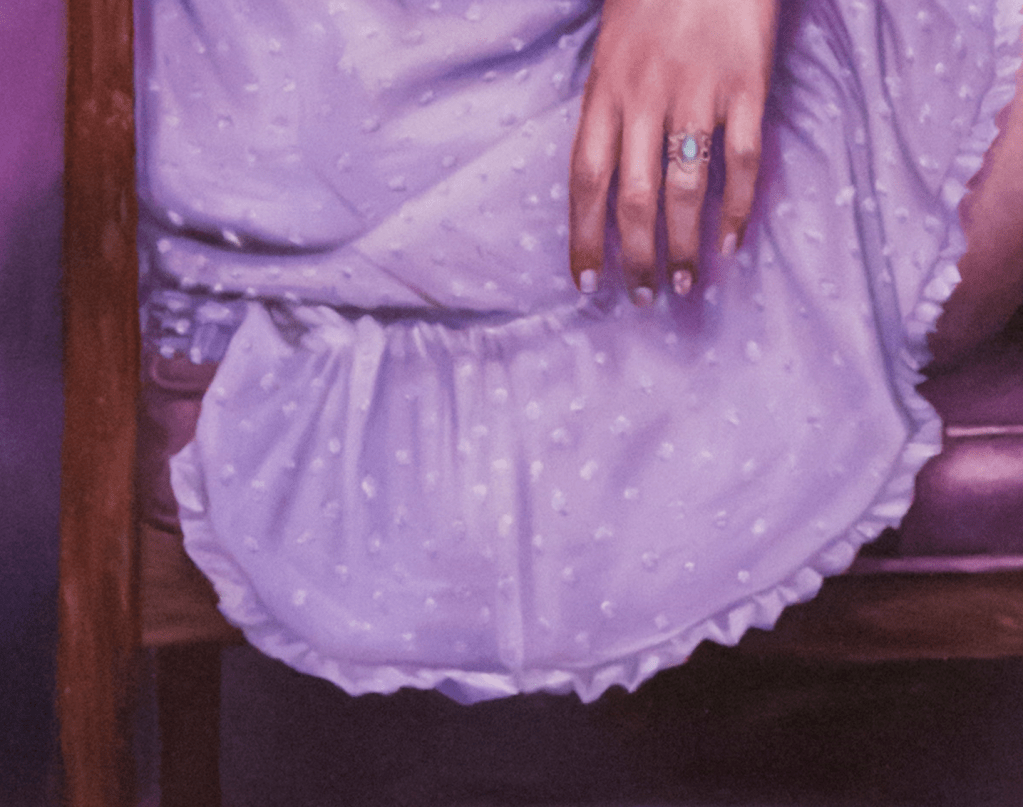
Getting so close with Woman in Pink! These hands gave me so much grief but I was so excited by the progress on the dress at this stage. Adding the little puff balls on the dress was my favorite part on my last night working on these. 
Hands finished! Trying to gear myself up for that intrepid wood frame on the chair… ugh. 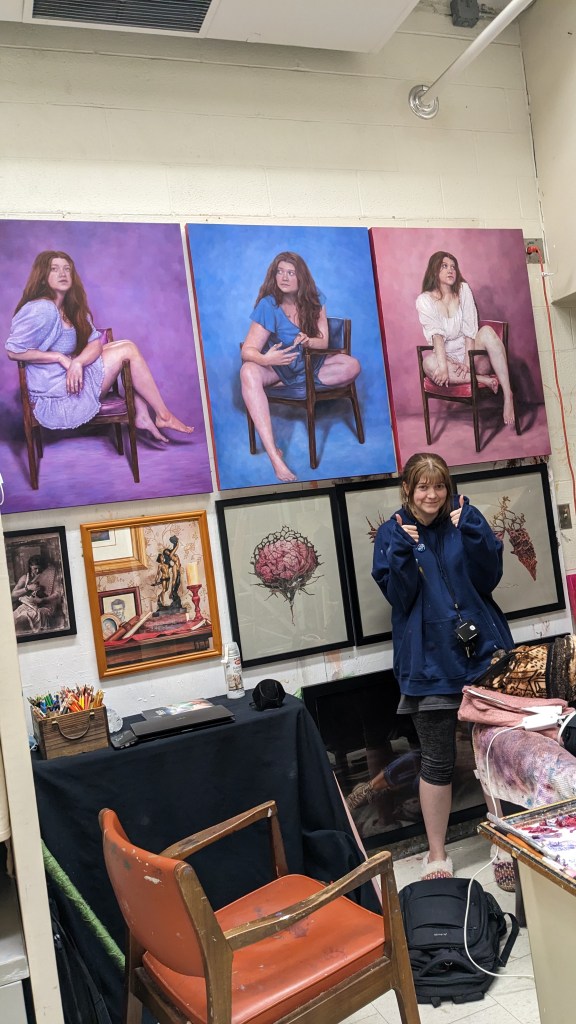
Here I am, dead on my feet after hours of painting right before finals in Spring 2023. My roommate took this picture around 1am when I hung Pink up to dry and we saw all three together for the first time! 
Woman in Violet was in the Annual Student Juried Exhibition by UNCC in 2023! 
Woman in Violet on display in the Real African Art Gallery in Charlotte, NC (and yet another instance of me not knowing how to pose in front of my work.) 
Woman in Blue was displayed at Atkins Out Loud, a UNCC Honors College event that I spoke at, representing the Art and Architecture Honors Program. 
Here are the three displayed together for the first time at “Portraits of Memory,” an exhibition I co-curated with Brittany Portner in 2023. 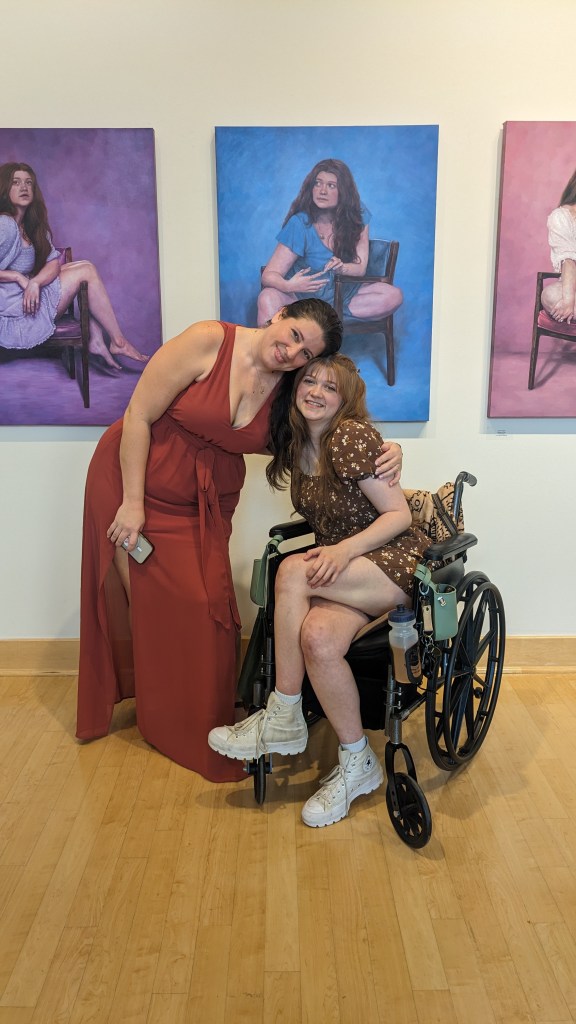
Brittany and I posing in front of the Woman in Chair series at our reception 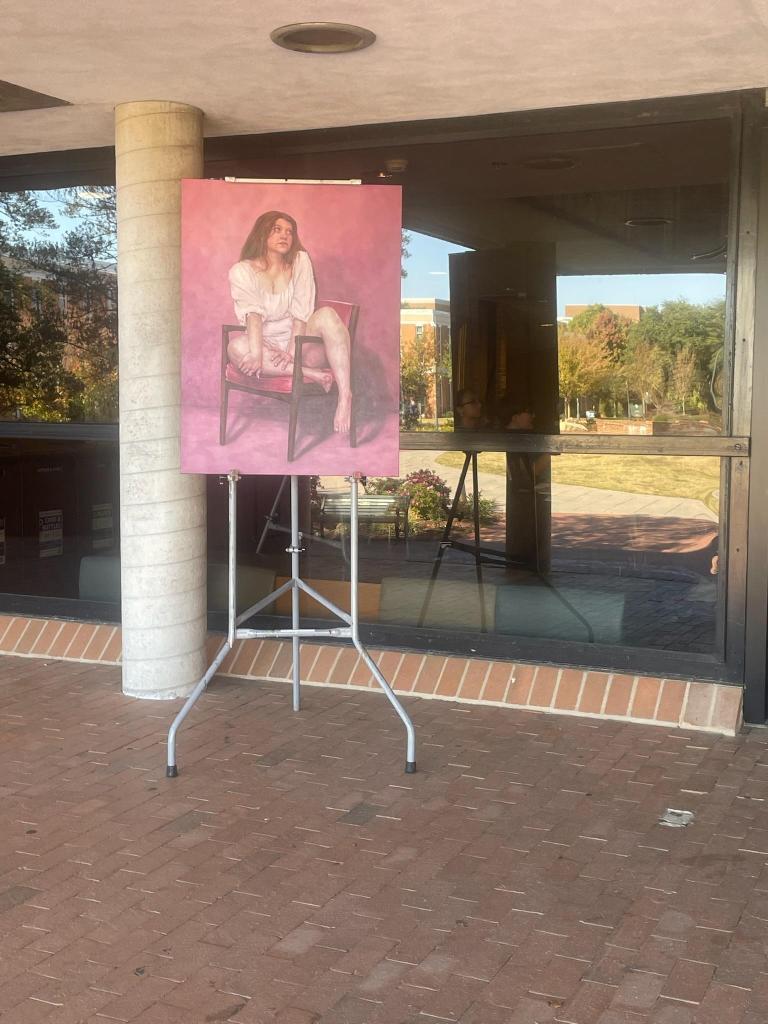
Woman in Pink was borrowed by COAA during UNC Charlotte’s Open House in 2023 and displayed at the front doors of Rowe Arts! 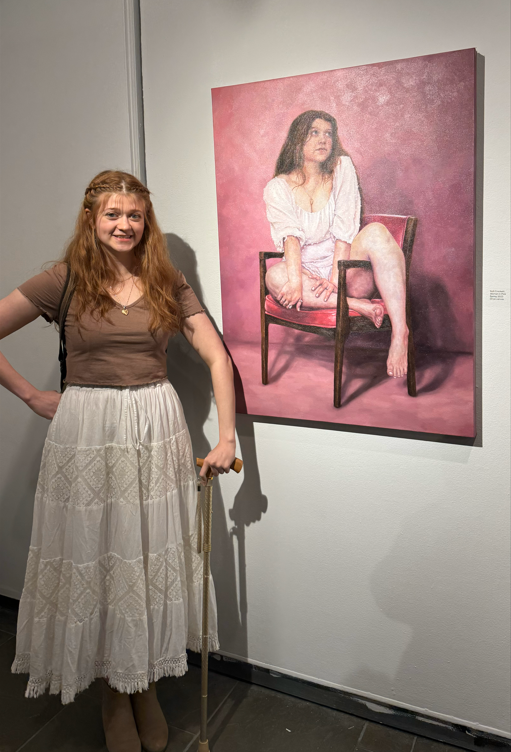
And finally, Woman in Pink was in the 56th Annual Student Juried Exhibition at UNCC and won 2nd place in show! 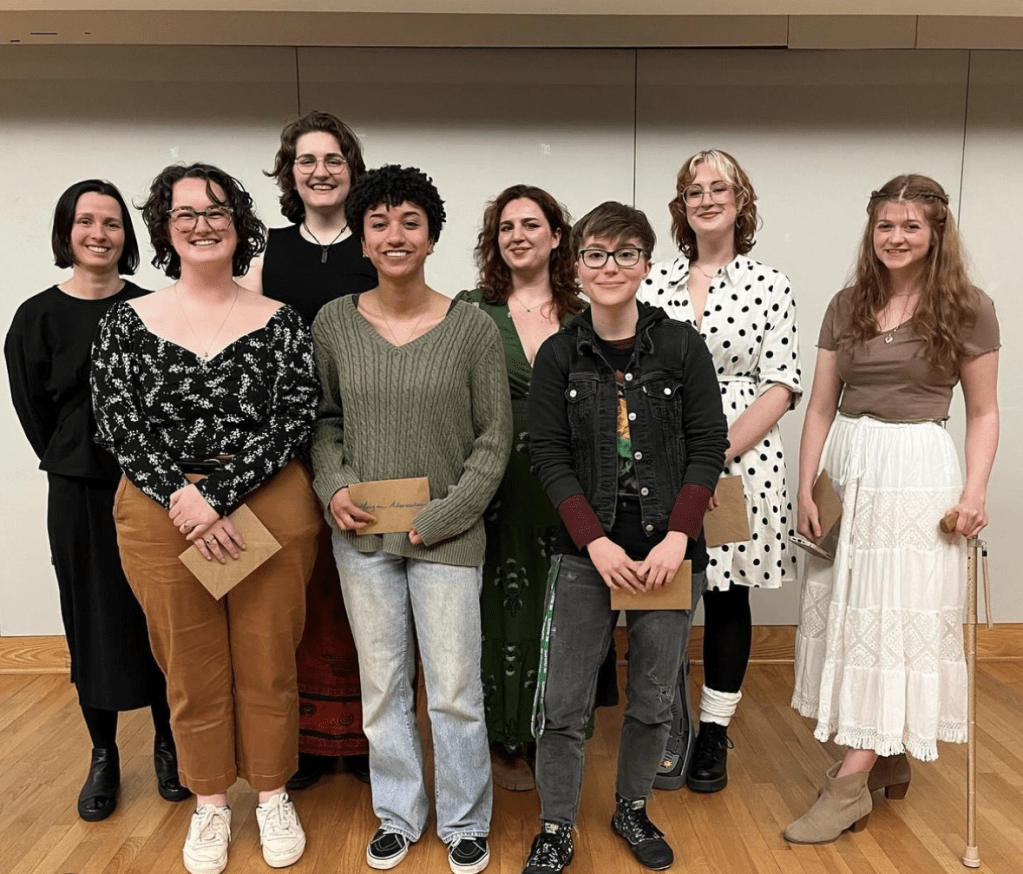
Here I am with the other award winners on the stage in Rowe on reception night:) 
And of course, the palette by the end of this series (And Effacing Portraits, which I worked on at the same time)… This was so satisfying to scrape off!


 Kelli Crockett Art