


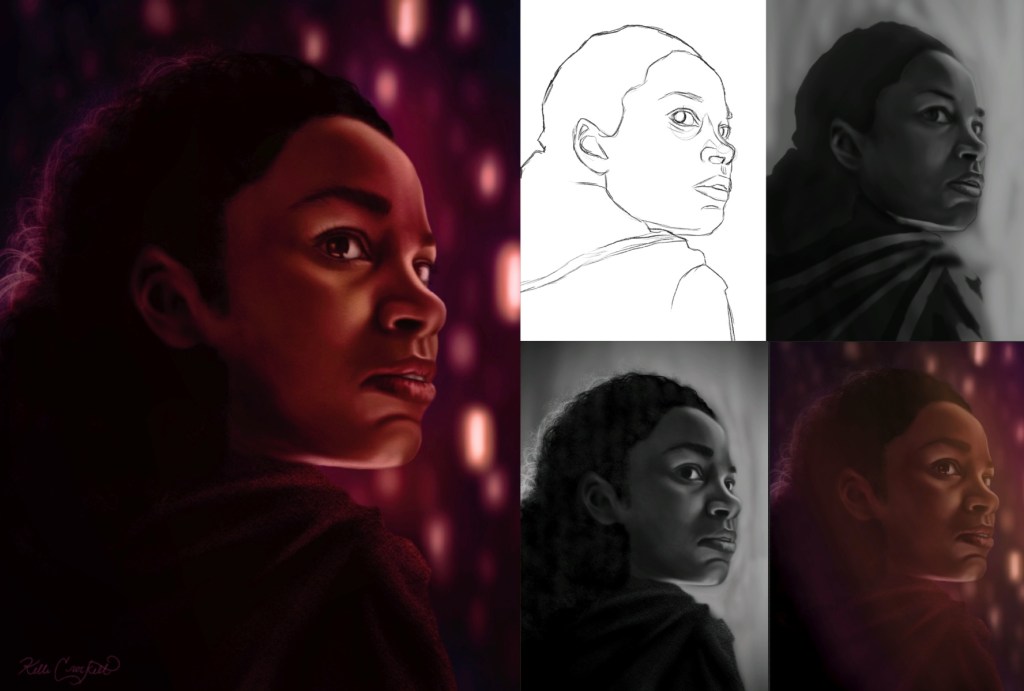

“I began painting digitally in 2019 when I got my first drawing tablet and discovered that the intimidating process of digital art held so many possibilities to expand my creative knowledge. The ability to zoom in and out, use the undo button, build layers, and inspect colors with exact measurements was groundbreaking for my aptitude to teach myself how to mimic reality in my work. It quickly became a tool to help me plan and revise my traditional artwork, but later morphed into a journey of itself. As I more quickly and accurately experimented with techniques, I found that digital painting as a medium was rewarding, enjoyable, and somehow, came naturally to me in ways that oil painting and drawing did not. It wasn’t for a long time that I realized I was making art with it at all–I always saw these as experiments and studies to further my paintings, but stopped and looked back to see I now had both the tools and the experience to start engaging in something new. It was both a gift and also frustrating to discover that I’m naturally attuned to a media I never wanted in the way I so desperately wanted to oil paint, and had to work twice as hard to paint traditionally than to do these artworks. As you can see, of course, I ended up embracing digital media alongside my love of painting, even getting degrees in both in college. I love the unique interconnectedness they share for me, even when they operate as separate media.
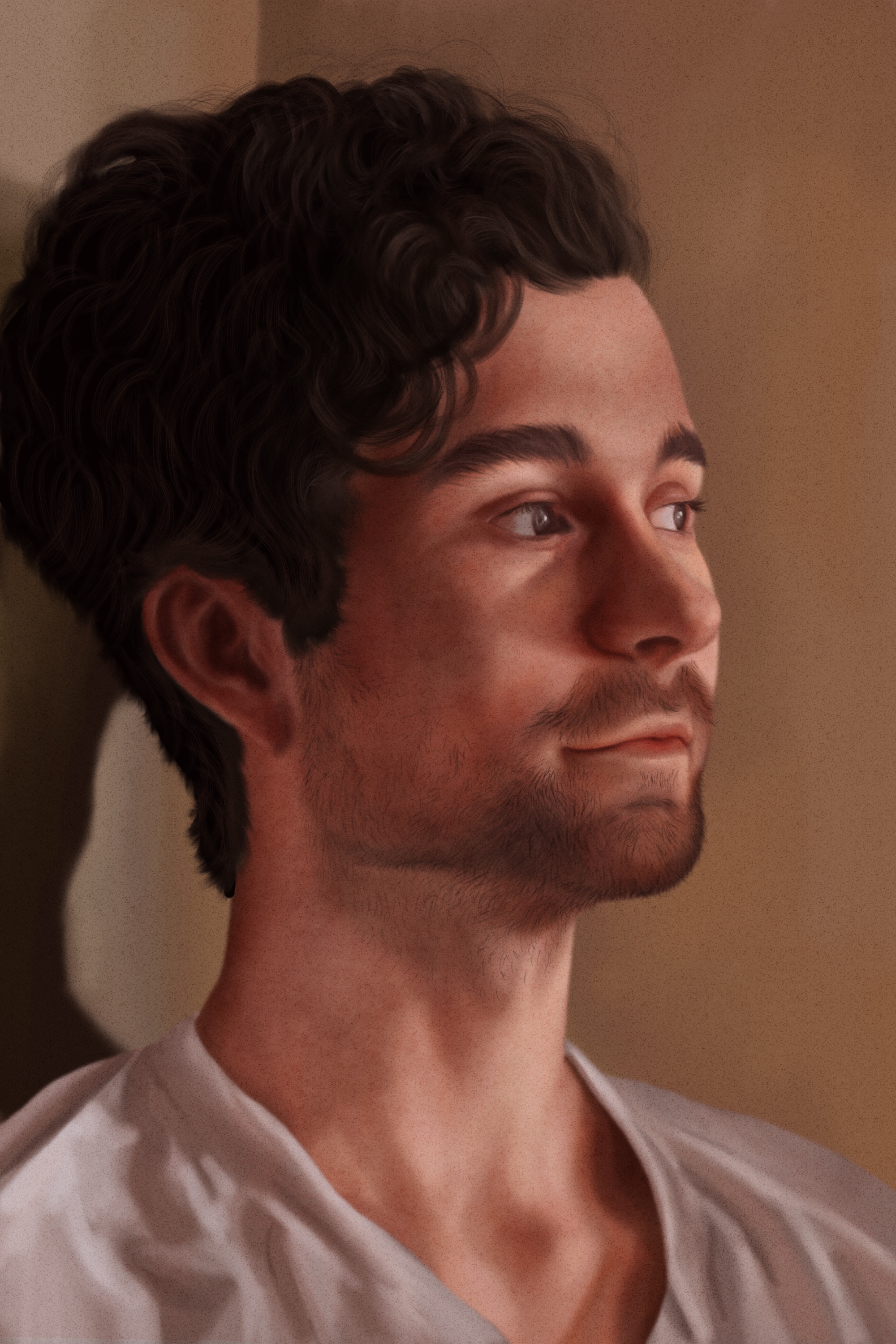
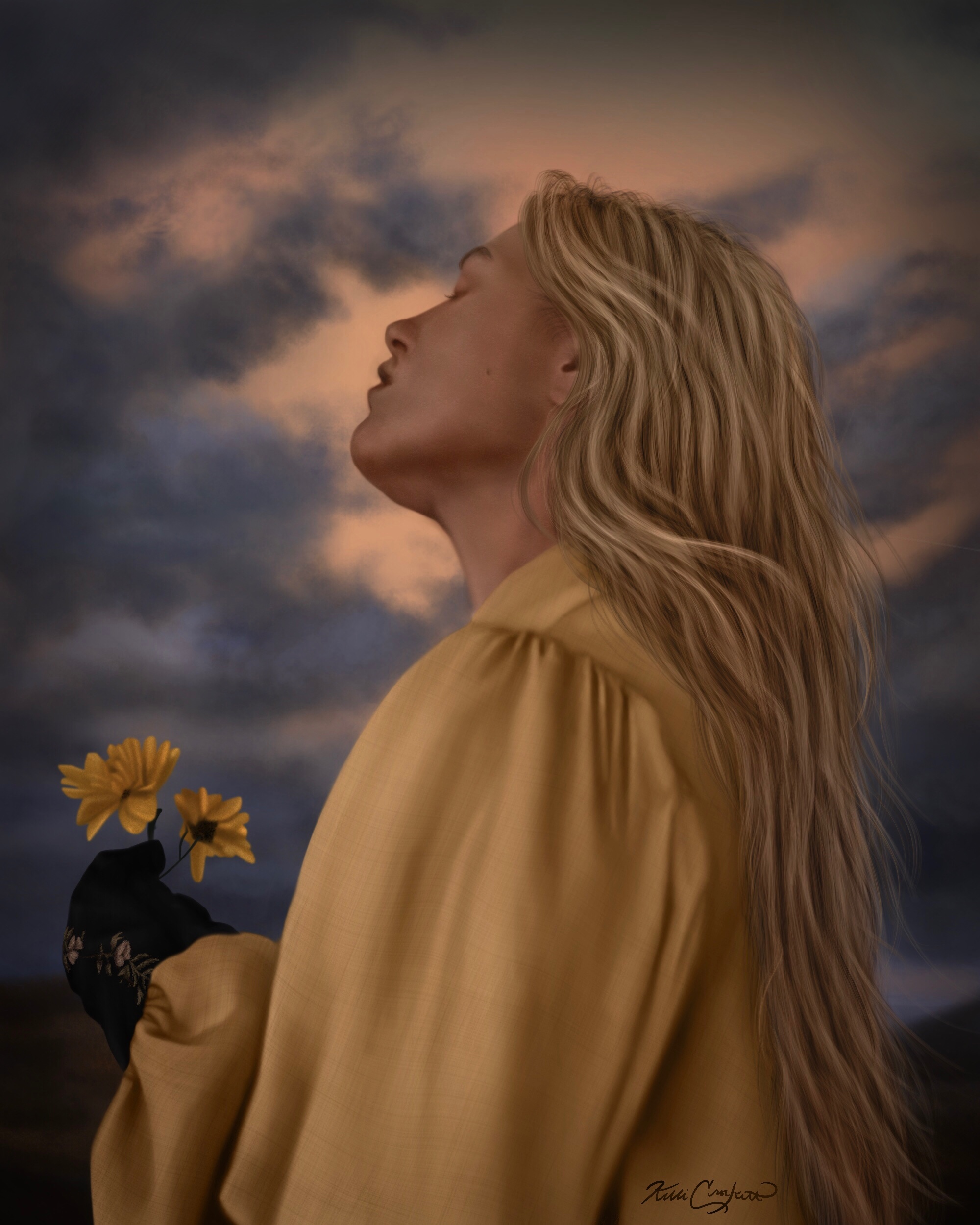
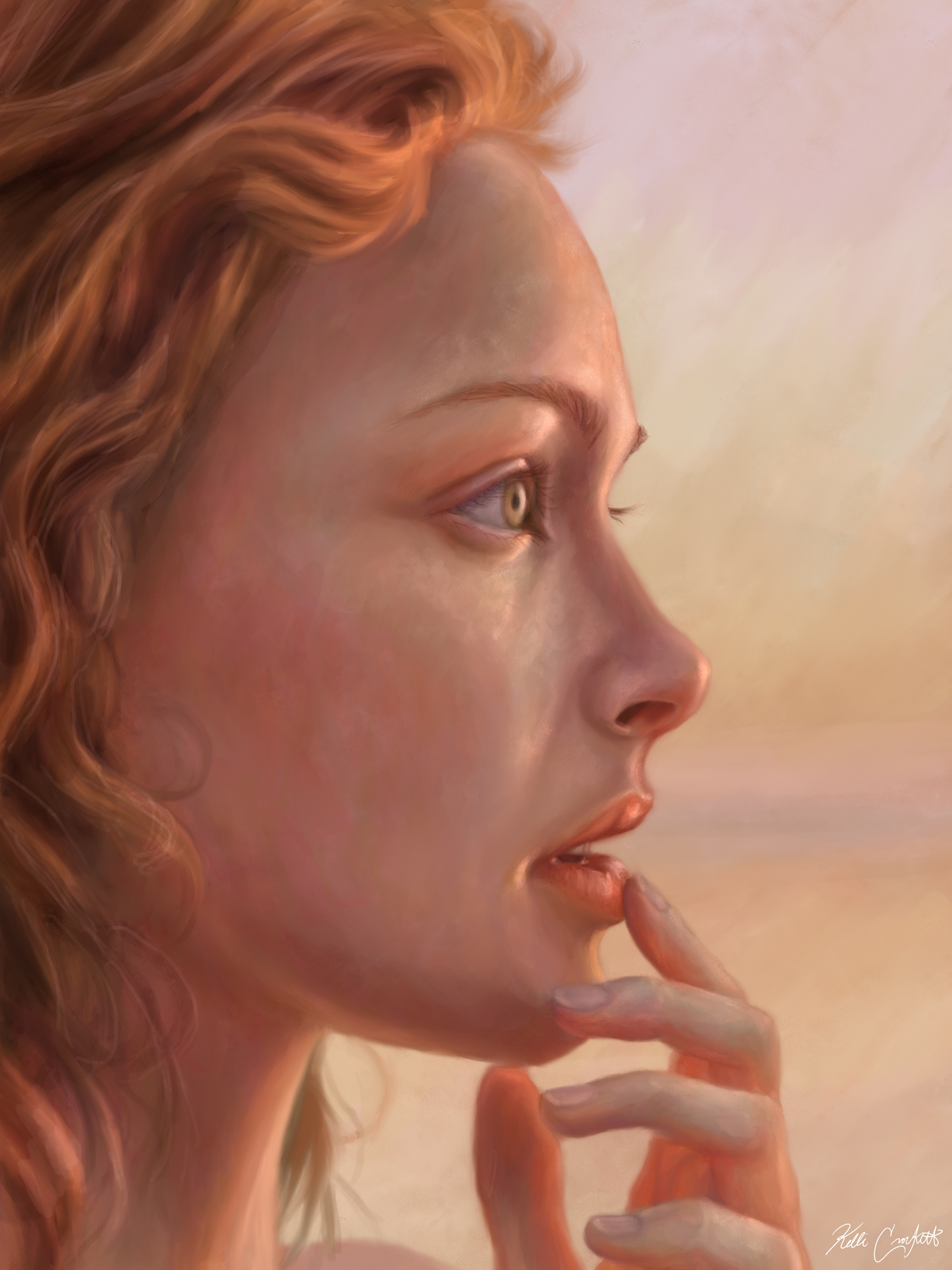
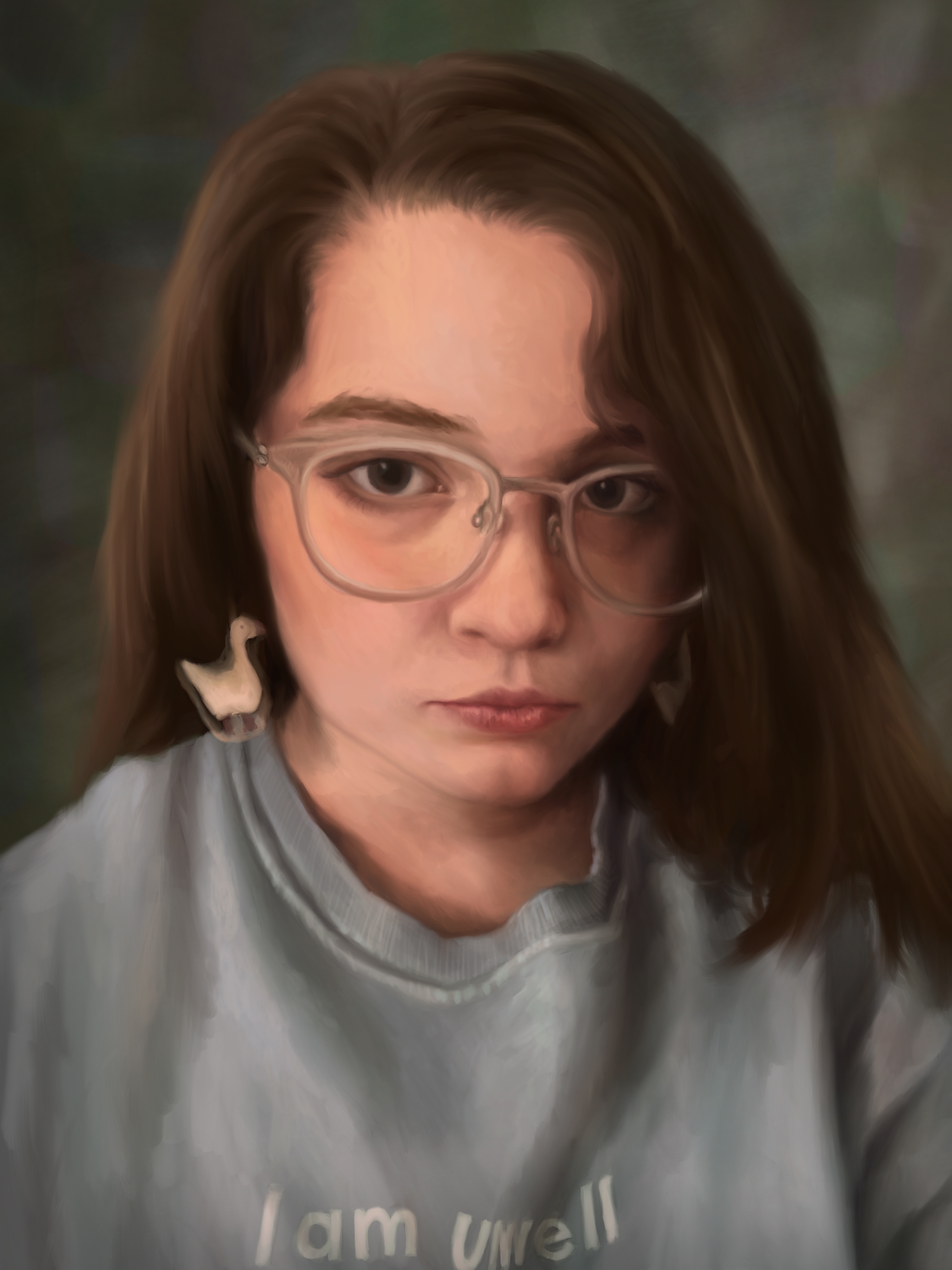
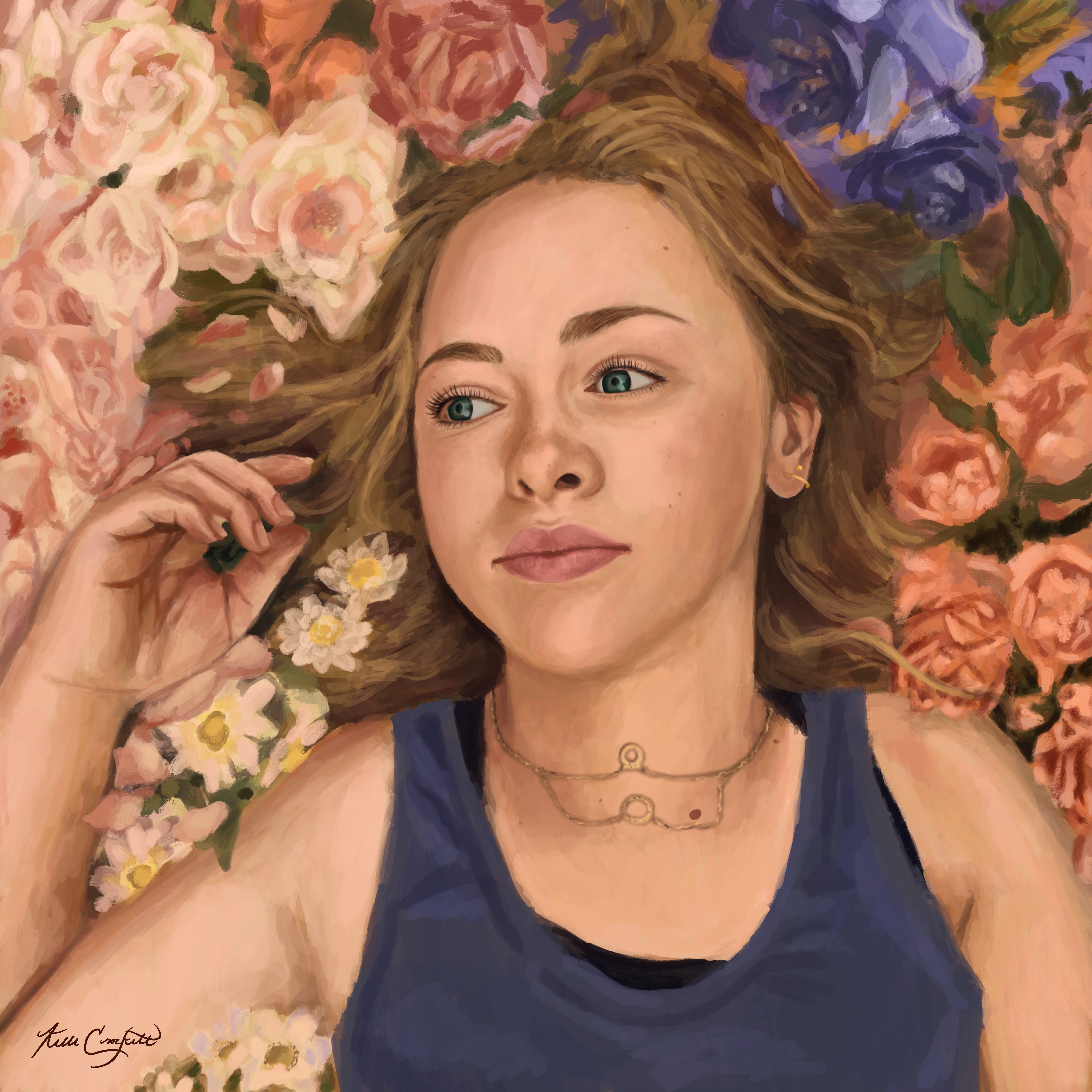
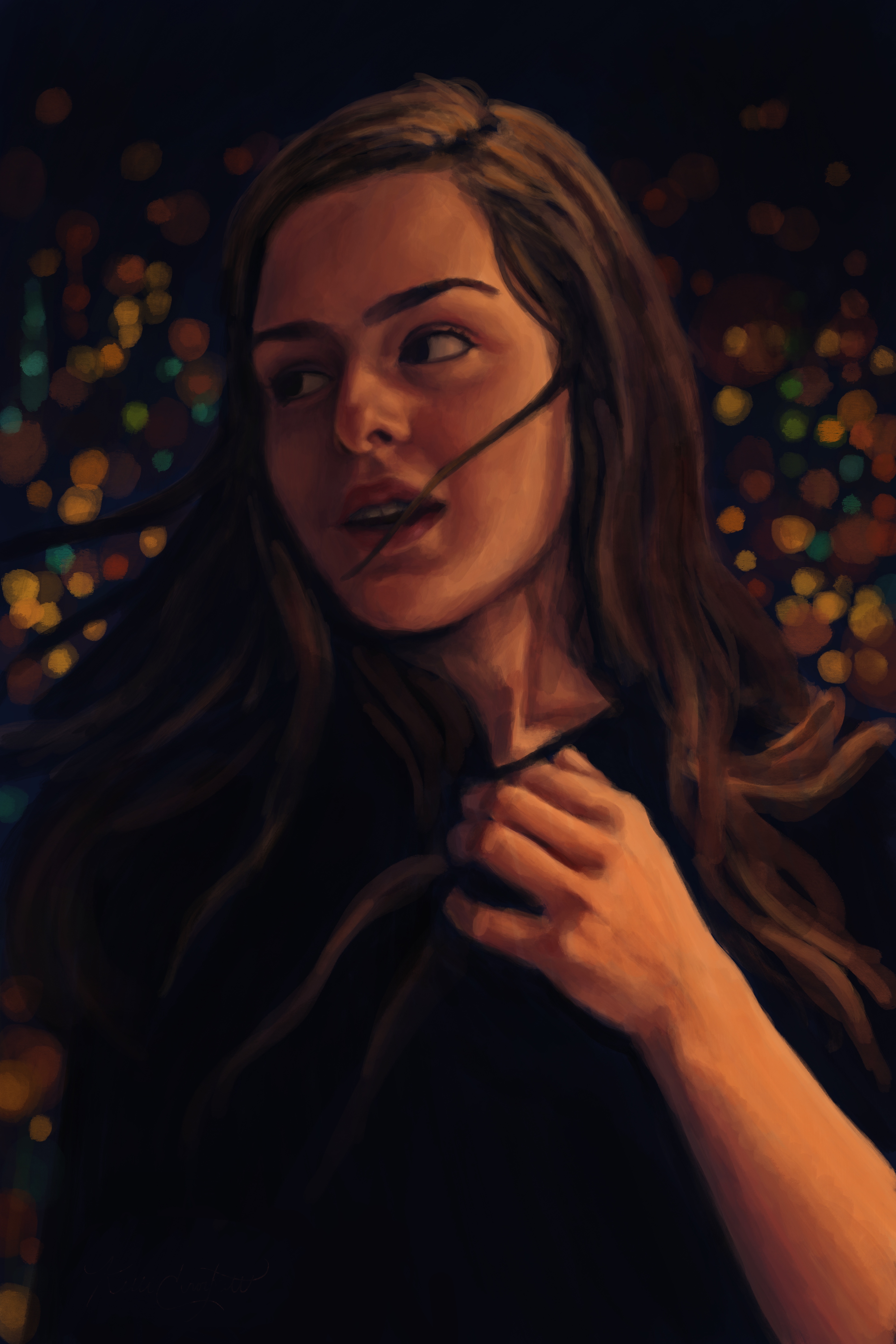
My digital paintings primarily focus on portraits and capturing the likeness of a person’s emotions, trying to distinguish how those portrayed emotions can affect the emotion of the viewer. Art imitating life, or perhaps life imitating art, or both. I found faces to be the most mysterious and alluring subjects to render because the overwhelming spectrum of emotion found there far exceeds what is visible superficially in animals, which I had most recently been working with. I wanted to paint things that were alive and I had never worked with people, who were so living that it startled me to see them come alive on the screen the longer I drew. The subtle shifting of the lips or eyebrows when painting can alter the entire expression and as a result, the process of rendering a face is the most engaging artmaking I do. Furthermore, I’m a face blind artist (I did an entire Honors Thesis research project on it in my undergraduate degree entitled “Effacing Portraits: Prosopagnosia as a Mode of Painting”) and having this invisible obstacle between myself and the familiarity of the person creates another facet of exploration in art making. When I work on faces, it feels the same as rendering a still life, since I approach them so analytically and pay most attention to color, contrast, value scales, intensity, etc. Then, all at once, I get the uncanny feeling that someone is looking back at me, and the face I have been fighting so hard to get through to breaks the surface and I think, “I’ve done it, it’s a person!” I’ve embarked on many projects at this point in my career that stray from portraiture and figure, but I feel as though I always return to this striving need to capture what’s in front of me, hold it still, and really see it, like wiping away the haze of a foggy window. That feeling will always bring me back to making art about people and the unreality of their human emotions.”








 Kelli Crockett Art